UN Sustainable Development Goals
Alik
Ismail-Zadeh
Preamble
The 2030 Agenda for
Sustainable Development, adopted by all United Nations Member States in 2015,
provides a shared blueprint for peace and prosperity for people and the planet,
both now and in the future. At its core are the 17 Sustainable Development Goals
(SDGs).
The Sendai Framework for
Disaster Risk Reduction (SFDRR)
is deeply interconnected with the SGDs, acting as a protective shield for the
2030 Agenda. Unmanaged disaster risks can undermine development gains, while
effective risk management helps safeguard and advance sustainable development.
The Paris Agreement (UNFCCC-PA)
primarily contributes to SDG 13 (Climate Action) while effective climate
mitigation also supports other goals, such as SDG 7 (Affordable and Clean
Energy) and SDG 15 (Life on Land).
Together, these frameworks
form an integrated foundation for global sustainability.
EXPERTISE
My research and teaching contribute towards the following SDGS:
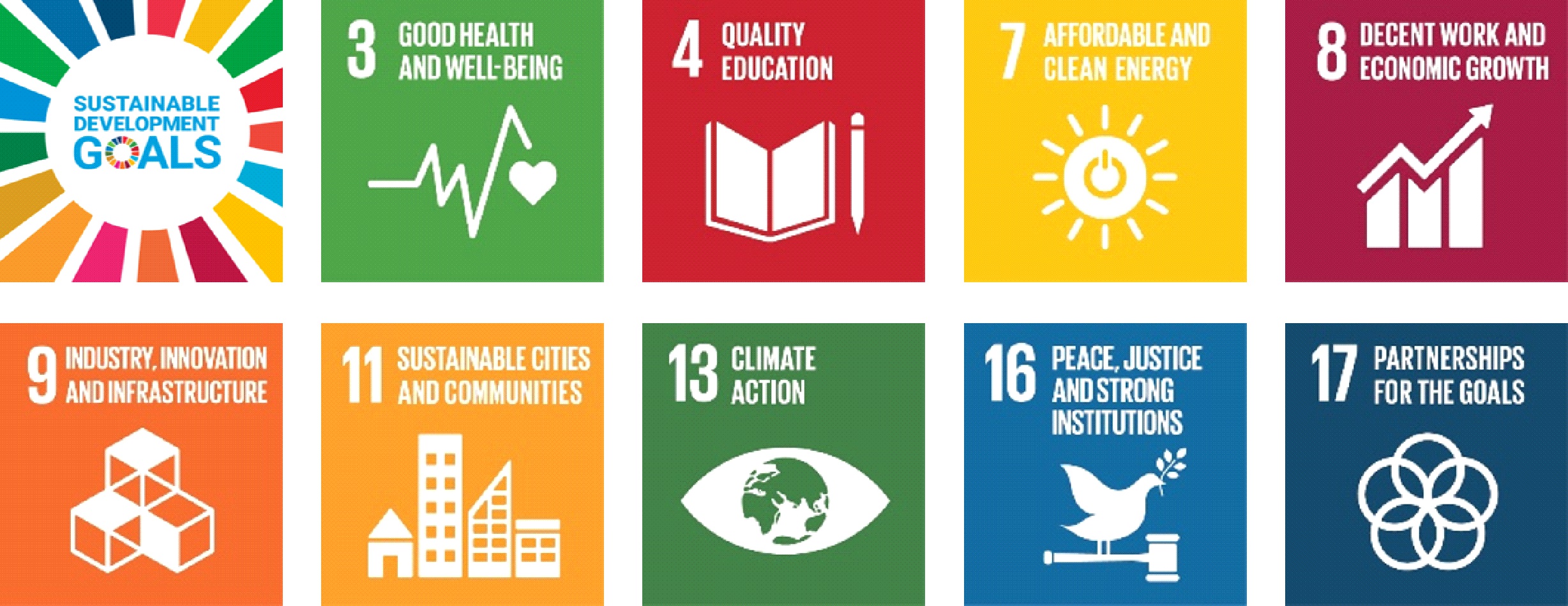
Goal 3. Ensure healthy lives
and promote well-being for all at all ages.
Advancing human well-being
requires reducing disaster risks associated with both natural and human-induced
hazards. My research on earthquakes and volcanic eruptions contributes to
improving the understanding of geohazards, their underlying processes, and the
risks they pose to societies, thereby supporting disaster risk reduction and
resilience-building efforts.
Goal 4. Ensure inclusive and
equitable quality education and promote lifelong learning opportunities for
all.
Addressing complex
sustainability challenges demands interdisciplinary approaches in higher
education. I contribute to this objective through the development and teaching
of interdisciplinary courses on (i) Computational Geodynamics and (ii)
Geohazards and Risk Analysis, which equip students with the knowledge and
skills needed to tackle real-world environmental and societal challenges.
Goal 7. Ensure access to affordable,
reliable, sustainable and modern energy for all.
My research advances
understanding of the formation, evolution, and sustainable utilization of
geo-resources in sedimentary basins, contributing to the responsible management
of Earth s resources and supporting long-term societal and economic development.
Goal 8. Promote sustained,
inclusive and sustainable economic growth, full and productive employment and
decent work for all.
Goal 9. Build resilient
infrastructure, promote inclusive and sustainable industrialization and foster
innovation.
Goal 11. Make cities and
human settlements inclusive, safe, resilient and sustainable
Disasters can undermine
sustainable economic growth, employment, and the resilience of critical
infrastructure. Through research on hazard assessment and risk analysis, I
contribute to the scientific knowledge needed to support safer, more resilient,
and sustainable communities and promote implementation of SDGs 8, 9, and 11.
Goal 13. Take urgent action
to combat climate change and its impacts.
A focus of my research on
disaster risk reduction is to understand how climatic and environmental changes
influence the occurrence and intensity of extreme natural events and their
associated risks. This work contributes to improving preparedness, adaptation
strategies, and resilience in the face of global environmental change.
Goal 16. Promote peaceful
and inclusive societies for sustainable development, provide access to justice
for all and build effective, accountable and inclusive institutions at all
levels.
I contribute to research and
education in science diplomacy and science policy, fostering evidence-based
decision-making and strengthening the role of science in promoting peaceful,
inclusive, and sustainable societies.
Goal 17. Strengthen the
means of implementation and revitalize the global partnership for sustainable
development.
Through studies of
international scientific cooperation, I support the development of global
research partnerships that facilitate knowledge exchange, capacity building,
and collective action toward addressing shared societal and sustainability
challenges.